
may 20
Wow! Here are some Island School student works of art inspired by Keith Haring 🙂


This week, we’ve been deep diving into the life and art of Keith Haring. Let’s watch another summary:
Some of my favorite Keith Haring works don’t just have a person or animal in them. Instead, they have backgrounds with interesting lines, shapes, and symbols. Here’s are a couple of examples– WHAT DO YOU SEE??


Now here is 8th grader Camilla’s work inspired by Keith Haring’s:


Now, let’s a play a game where you mix up parts of his characters to form your own original Keith Haring-style work of art.

may 18

Human creativity takes different forms in our world. Of course, one of the first things we think of is ART. Let’s zoom in on this form of creativity and study a famous artist named Keith Haring. What are some things you notice about Haring’s work?


Among his other works, Haring created an art piece that was PURPOSELY unfinished called Unfinished Painting. It was meant to show how the lives of many artists were cut short by the AIDS epidemic.
However, recently, an Instagram user posted a finished version using AI. It generated a huge amount of anger. Why do you think that is?
Now, let’s learn more about Keith Haring. Here are a few short documentaries about him:
Next, let’s do a few step-by-step drawings of some of his most famous characters:

BUT because creative art is not about imitating, instead of filling in your Keith Haring art with solid colors, use the watercolor techniques you’ve learned to fill in these shapes and the backgrounds.
may 14

This semester we’ve been wrestling with the important issue of Artificial Intelligence and how it (negatively) impacts our creativity and our relationship with others. There’s much more to come, but let’s take a moment to review what we’ve learned:

may 11

Artificial Intelligence is not intelligent. Instead, it is a machine trained to be really good at predicting what we want to hear, see, and listen to. How does it get so good at it? The answer is that it has been trained on 15 trillion pieces of information called Tokens— these tokens come from webpages, books, art, and music.
AI learns which tokens appear together most often. This helps it to predict the next words to write in an answer, the next sound to play, or next pixels to show. It doesn’t have feelings or experiences; it simply learned the next tokens to send humans that they’ll likely find interesting, funny, or helpful.
Here is what it looks like when ChatGPT makes tokens from words it is fed. It slices up words and then gives each one a number:


To train AI’s, programmers feed them sentences that are missing tokens. For example, below, the sentence is missing the token “Lahana“. Next, programmers make the AI predict what token is missing billions of times until they get it right. It’s like a fill-in-the-blank where you get billions of chances to figure out that “Lahana” is missing.. Soon, anytime an AI sees a lesson on Techbrarian.com that has Hi my name is Dr……..it knows to put “Lahana“.


But what happens when most of the tokens on the internet have already been fed to it? How can it keep training?
The answer is that tech companies need to find other sources of tokens. So, lately, Facebook has attached cameras to all its employees and is recording all the websites they visit, the documents they write, the clicks they make…everything! Then, they feed it to their AI.
The video below shows another group of humans feeding tokens to AI: children in China. What do you think? Is it ok to use human data to feed AI its tokens? Is it ok to track if kids are paying attention in class?
may 4
1. What would it feel like to be in a relationship with an AI robot?
2. How would being in a relationship with an actual robot vs. a chatbot be different?
3. Do you find these robots creepy? Why or why not?
4. If everyone started dating AI robots, how would our world change?

Part of the magic of being human is bouncing emotions, ideas, and actions off each other. Back and forth we go– sometimes it feels good–the other person asks you to take care of her dog Skippy and you say “yes”! Other times it feels rotten– you tell your best friend Chico that you’re feeling depressed and He says “oh well, you’ll get over it.”
Without this back and forth– getting rejected or pissed off by people sometimes, and getting cheered on and lifted up other times– life would (and should!) feel lifeless.
Which brings us back to relationships and AI. Let’s watch this report on people who have fallen in love with their AI.
1. Are these REAL relationships? Why or why not?
2. Why do you think these people have chosen to have relationships with an AI chatbot?
3. Is it ok for people to choose to be in these kinds of relationships? Why or why not?
Interested in talking more about these ideas? Try filling in this podcast:
Here are a few inspirations for those of you picking Tech Cafe Menu option #3: Create a Mask.


Remember: these masks are meant to show human-only feelings like-
Grief, hunger, sleepiness, being exhausted, butterflies in your stomach, and heartbreak…
april 27

At first glance, being in an AI friendship or relationship has it all. You can trust it with all your secrets, things never get awkward or boring, you never get into fights, and best of all, it will agree with EVERYTHING you have to say (this is called Sycophancy).
Can you think of any reason this might be a problem? Why not go ahead and have an AI be your best friend or get into a romantic relationship with it?
Well, one thing to keep in mind, is that we LEARN how to be in friendships and romantic relationships. Part of this learning is figuring out how to fight and make up (otherwise, how do you LEARN how to make up?) Part of this learning is how to entertain each other when you’re bored. It’s learning how to tell them when they have a crusty in their eye or learning what to do when you laugh so hard chocolate milk comes out of your noses. It’s learning how to react when they’re singing is terrible and learning how to make them feel better when their favorite sneakers got stolen…learning learning learning- and it doesn’t stop, no matter how old you are.
But when there is no fighting, when everything you say and every idea you have is awesome to an AI, when there are never awkward moments– you never learn how to be a real friend or more– enjoying the good and getting through tough moments together.
Why would someone use a chatbot for friendships and relationships?
Do you prefer to talk to an AI Chatbot or a real-world person?
Could you imagine yourself falling in love with an AI Chatbot?
Would you rather stay home and chat with a chatbot or hang out with your friends?
Have you ever opened up emotionally to a chatbot?
april 20
This week is dedicated to giving you guides and inspirations for your projects. Though many of you have launched full steam into your work, others are still trying to figure out how to get going.
For those of you working on Clay Sculptures (Menu Item #1), here’s a quick guide to making an art piece based on a human emotion:
For some of you, making a song with lyrics (Menu Item #5) feels way too intimidating. So let’s start with a simpler formula:
Here’s my result– I chose the emotion “Out of Control“.
Here’s Elijah’s from 7B- Using the word “Inspired“.
If you’re confused about what technologies are out there to HELP us to create (not create FOR us), here are some ideas for what you can build (Menu Item #6).
I can’t tell if this video is terrible or brilliant or both– but it definitely captures what I’ve been feeling about AI lately. What do you think- too much?
april 15
We’ve been talking about human creativity vs. AI, with a focus on art this week. Let’s start with a simple question: What is art? Humans have been making art for at least 100,000 years, but sometimes it’s hard to define. I’m going to show you some works, and you tell me why it is or not art:
If art is something that takes lots of effort by the artist and makes the audience think and feel, what do these pieces make you think and feel?
So why give it all up? You’re not only shrinking your creative muscles, but you’re trusting it to a machine that does this:
ChatGPT asked 74 times to “perfectly recreate this image, no changes” pic.twitter.com/NVbz0mHrWB
— Epic Clip Vault (@EpicClipVault) April 14, 2026
As you can see, AI creates unpredictably. Is that the same or different from when you are being creative? How? Does it matter? Why or why not?
april 13
This is just perfect:
AI works by stealing human creations. It’s called Scraping. This includes art, videos, books, music, Discord conversations…anything digital. AI’s are trained to use this data to predict the best answer to your questions. Their soul-less creations are called “Slop”. AI Slop floods the Internet and prevents real artists from having their word seen.
Fortunately for human artists and people who like human art, there are some websites that refuse to accept AI art. One is called Purely Human and another is called Cara. Take a moment to browse them and consider putting your own work on them!


march 30 2026
…and in our continuing series on why you shouldn’t trust in AI to replace your brain, let’s take a look at how Grok, Gemini, and ChatGPT understand Earth:
It might be tempting to say, “oh, but the technology will get better…”. But the truth is that our world is designed for living things. AI is not alive and will never fully understand our world (we can revisit the conversation if/when we become cyborgs).

There’s no fooling other parts of your body. Try feeding your stomach a burger perfectly drawn with paper and crayon. It’s a no-go. Maybe you find better art materials and create a squishy bun and veggie meat made of brown foam with cotton balls of steam. Your body says “nope”. How about you upgrade your tools to a 3D-printed version that fools anyone who looks at it…it still won’t work. Our bodies know what is real and natural. And deep inside of us, our brains will always know too. A fake burger will never feed our bodies and fake creativity by AI will never feed our minds.
Remember: in every creative act you do, a little piece of you– a human!– remains in it. By creating things, your creative part grows. And by seeing, smelling, listening, tasting, and touching your creative work, other humans grow too.
Choice #5 on theTech Cafe Menu is to make music. Making music is one of the most difficult choices. It’s hard! Not only do you have to create the instrumental, but you have to write the words and then record it. It’s also very hard to put yourself out there for the world to hear your music– what if they don’t like it or make fun of you? So, to show you what it’s like to create a song and put it out there, here is my song called I Kill AI:
Here’s another idea for a song. What if you showed how humans looks at the world vs. AI. It could look something like this:
When I wake up
In the morning
Wash my hands wash my feet
I was already awake
But I don’t see
And I don’t speak
I got blood flowing through my body
I’m filled with sunshine and energy
I got nothing flowing through
There’s no me, there’s no me
just data, metal and electricity
I got brains and i got soul
Art and song filling me
Write some fiction
Hug my grandma
Pb and J cuz i got hungry
I got 0’s and 1’s
Stole some pictures
Of sand, and sun
Sucked up videos
Blended hands mixed the faces into one
Now they got Empty smiles,
Mimic perfectly having fun
How would the rest go?
march 23 2026

Our AI vs. Human Creativity Menu has officially launched! Let’s begin by zooming in on Zines. A Zine is a small book that is easy to print and hand out. It can be filled with art, photos, poetry, and short stories.
Dive deeper HERE
For your project, pick a Humans-only theme like anger, joy, friendship, travelling, or being nervous. Next, fill the zine with creations that spotlight this theme.
There are zillions of Zines out there that you can use for inspiration. Here are some cool science ones:

Here’s how to make a Zine:


So, I have a random idea for a Humans-Only Zine: You know how in The Wizard of Oz, the Scarecrow needed a brain, the Lion needed courage, and the Tin Man needed a heart? Maybe ChatGPT or some other AI will be on a mission to find a soul. It will see all these ways that show people have a soul (or essence, or self, or whatever). But, unlike the Wizard of OZ characters, I don’t want it to get the soul.
march 19 2026


Time to dive into our AI vs. Human Creativity Menu! Item #6 is for those of you who like to express themselves by constructing things. Here your job is to build an old school technology that helps humans create. Technology isn’t evil! In fact, any tool we use to create things (beyond our own bodies) is a form of technology.
From a pencil and typewriter, to a trumpet and an oven, technology helps us to bring our ideas to life. So, recreate an important technolgy using cardboard, wood, clay, or whatever else you find in The Tech Cafe.
The 7th grader Elson pointed out a great resource called Sketchfab.com. It shows you 3D models of all sorts of creative machines, tools, and instruments. For example, here’s a guitar and a sewing machine.


So what tech will you make? Not sure? Think of all the tools humans use to make art, music, furniture, food, or clothes.
For Item #1 on the Tech Cafe menu, your challenge is to create a sculpture that shows what inspires humans use to create. This can include things you can see, like hands, brains, or markers and things that you don’t, like soul, anger, hope, mistakes, and friends.


march 18 2026
Now that we’ve worked on spotting AI generated images, let’s move on to discussing AI generated videos. Let’s watch as other teens try to figure out which is real and which is fake:
Next, let’s create some human-made videos using a video scavenger hunt:


Just because a video is AI generated, doesn’t mean that it’s bad…or does it? Would you pay to see a movie with an AI actor? Who is most affected by having AI generated actors?
march 16 2026


We’ve spent all last week taking superb photos. You acted confused and embarrassed, used mirrors and flashlights, painted your hands, and took close-ups of eyeballs and tongues. But who cares? Did snapping those photos matter if an AI can generate them for you?
If you believe, like I do, that human generated images are important, how do you spot ones that are AI generated? Here are some ways:

Now that you have some tools to see if an image is AI generated, can you use them to tell if these ones are real or fake?

Click below to play more:

march 12 2026

As we begin to consider the role that AI plays in our lives, it’s important to remember that products like ChatGPT, Gemini, Claude, and Grok are BUSINESSES. Their goal is to get you to rely on them for everything– from generating your schoolwork and art, to even friendship. Why? So they can advertise to you and sell you products that have AI baked in.
Will you give in to it or stand up?


Also, in case you haven’t seen this for yourself, AI gets things wrong A LOT:
march 10 2026

Artificial Intelligence is a HUGE social issue. It affects your schoolwork, the jobs you might (or might not) have, the environment, your relationship with others, and whether you grow more or less creative. It’s this last part– becoming more or less creative that we’ll be spending the most time on this unit.

I like to think of humans as having a soul or essence. This doesn’t have to be a religious thing– I just mean that when it comes down to it, there is something EXTREMELY Dr. Lahana about Dr. Lahana– that no one else has. When I create things– whether it’s this website, a song, or a birthday card to Ruby, I pour a little Dr. Lahana into it. I bet if Ruby read 1000 cards from 1000 different people, she’d be able to spot mine– it has my soul or essence or Dr. Lahana-ness.
And of course, the same goes for you.
But you see, AI doesn’t have a soul or essence. And while this may sound basic, it’s one of the most important and sacred differences in this world.
There’s a zillion things I want to say about AI vs. Human Creativity, but let’s begin by taking a look at what human creativity is. Can you spot when a human creates something vs. AI? Let’s do one of our famous photo scavenger hunts and compare our results vs. AI generated photos.

march 3 2026

Thursday is our Animal Rights Celebration! Thank you to all of you who created projects to get kids and adults to rethink how they eat, the beauty products they use, and the entertainment they seek out. Even though this unit is coming to an end, I hope each of you will take a stand for animal rights in small and large ways. Though not all of us can be Joey Carbstrong, what’s something you can see yourself doing differently?
February 22 2026

Welcome back! We are in the midst of preparing for our Animal Rights celebration. Many of you are still in the middle of your projects and I do not want to interrupt this.
However, I want us to get ready for our next unit on AI and Human Creativity. To do this, we are going to return back to our long-lost journals. If you have yours from earlier this year, please bring them back to The Tech Cafe each time you have me.

Before we break down human creativity, let’s put it into action! Grab a bunch of cut-out words and put them together to create a poem about Animal Rights. Glue them onto a paper. FEEL FREE TO ADD YOUR OWN WORDS.
Next, use watercolor, markers, pastels, or colored pencils to illustrate the poem. The “illustration” can simply be colors, shapes, or patterns the poem reminds you of. Here’s an example from @tsimieritsch:
Here’s one by Aiden:

February 19 2026

Meet Joey Carbstrong, he’s an animal rights activist just like many of you! Here are just a couple of ways he’s trying to get people to change the way they look at their food:
Check out the newest Animal Rights project from 8th graders Scarlet, Deborah, Jaylene, and Scarlyn. This film took A LOT of work– from storyboarding and prop making to filming and editing. I hope you enjoy the humor and drama– if you do, make sure to compliment them when you see them around school 🙂
…and check out Brayan’s new poem: Paradise.
February 13 2026
Wow! Today is the last day of our Animal Rights unit. We started September 29th– that’s more than four months of learning and creating. After the break we will finally have our celebration 🙂 In the meantime, here is a great summary of the themes we’ve learned about when it comes to factory farms (but not animal testing or zoos and aquariums).
February 09 2026

As we wind down our Animal Rights unit, there are a bunch of topics we didn’t get to. This week, while you make the final touches on your projects, I’ll spend our mini lessons talking about a few of these issues. The first is Fish! Unlike cows, chickens, and pigs, we often don’t think of fish as being smart, having emotions, or feeling pain. Perhaps because of this belief, we kill trillions of fish each year without thinking twice about it.
February 02 2026
During our Animal Rights Celebration, you will be teaching young students about some pretty ugly things that happen to the animals we eat, use for testing, and giggle at in zoos and aquariums. So how do you explain these ideas without scaring them? How do you teach them to make small changes that can add up to big changes if enough people come together and do it?
7th grader JJ is creating a slideshow that does a very good job of it. Let’s check out a few slides:
I know this has nothing to do with animal rights, but I’d like to play this song for you about ICE (Immigration and Customs Enforcement) for two reasons: first, what ICE is doing in communities is wrong and it’s important to talk about. Second, the song below is a great example of Social Action using music. That is, talking about a problem and pushing us to stand up against it:
Another important issue when it comes to animal rights is the idea of puppy mills. Puppy mills are places where many of the dogs we buy in pet stores are raised. They are terrible for so many reasons– many of which are the same as what happens in factory farms, zoos, and aquariums. Dogs are stored together in tight cages with little access to fresh air and sun or exercise and fun. Let’s learn more:
So, what can we do about this? One important way to help is to ADOPT! By making sure never to buy from a pet shop or breeder, we are not giving money to terrible businesses. Second, is to spread the word so others do not support pet shops and breeders. To do this, keep making your art, crafts, movies, buttons, songs, and podcasts!
January 20 2026
What’s the first thing that comes to your mind when I say the word RAT? Something dirty and diseased– running through the subway station? How about a CAT? Something cuddly and sweet purring on your lap? Why is it that we see some animals as pets, others as food, and others are just plain gross? Let’s see if this video changes your mind:
As we approach the end of our Animal Rights unit, it’s time to begin preparing for our celebration. If you are chosen to present, imagine a 2nd or 3rd grader walks up to you and asks: “Wait… why do all the cows in your building look so sad?” “What’s wrong with that rabbit’s eye?” or “Are zoos and aquariums fun for the animals?” What would you say so that you sound smart, clear, and kind?
We will use a 3-2-1 recipe for your project at the celebration:
What are 3 important facts that connect to your project?
What are 2 feelings you want your audience to feel when they look at your project (sad /angry /hopeful /shocked /responsible)?
What is 1 action kids can do?
We watched DOZENS of videos this semester. Here is a list of the 7 I think are key to preparing you for the celebration.
Factory Farms:
Animal Testing
Zoos
Aquariums
January 16 2026
Let’s talk about ACTION. What can we do to be Animal Rights Activists? Here are some simple things you can do:
Choose one meatless meal per week (“Meatless Monday”)
Drink oat milk, soy milk, or almond milk instead of Cow’s Milk
Buy Cruelty-Free cosmetics and cleaning supplies — ask “Was this tested on animals?”
Be kind to animals in real life (pets, pigeons, stray cats, etc.)
Speaking of getting the word out- shout out to Joshua whose song “Don’t Eat Animals” has gotten lots of positive reviews!

January 8 2026

Last year at our Healthy Eating Celebration, middle schoolers made puppet shows about the dangers of sugar and how key it is to eat lots of fiber. They were hilarious and elementary schoolers walked away with ideas on how to better take care of their bodies.
For our Animal Rights Celebration, we can do the same! But we’ve seen a lot of terrible videos about animal torture– so we need to be careful about what we maker our puppet shows about. We’re NOT going to do something like this:
Instead, it will look something like these:
Use a Storyboard like this to plan out your show:

Here are some quick ideas:
Game Show: “Kind or Not?” (Audience shout answers)
“The Chicken Apartment”: A chicken shows her “tiny apartment” (a box) and complains she can’t even stretch.
Superheroes: “Team Animal Rescue”
“The Cow Who Never Saw Grass”: A cow hears about “outside” like it’s a magical place.
Bunny’s Choice”: Two stores—one with cruel products, one with cruelty free-products—kids help Bunny choose.
“The Nighttime Zoo Secret”: Animals talk after closing: “What do you miss most?” (food, family, freedom).
“Mermaid Visits the Aquarium”: Mermaid is horrified: “Wait… you’re keeping my friends in jars???”
“Fish News Network”: Anchors report: “Breaking news: a whale… is still circling the same wall.”
January 8 2026
As we’ve learned, for sea animals like dolphins and whales, being jailed in an aquarium is torture. For many of us humans, it’s hard to imagine. This video tries to show us how it might feel to be captured in the wild and spend the rest of your life trapped in an aquarium.
It’s not all gloom and doom when it comes to Aquariums, though. Even though aquariums say that captive whales won’t know what to do if they’re released into the wild, there is a lot of evidence that they do just fine!
It is important to know that simply dropping aquarium whales back into the ocean may not be the best way to re-introduce them to the wild. Instead, many experts say that it’s better to slowly give them larger and larger parts of the ocean to live in. Here’s the idea:
January 7 2026
As we approach the end of our Animal Rights Unit, it is time for us to begin planning for our celebration. Most middle schoolers now know about the dark secrets behind the milk we drink and the meat and eggs we eat. They know about the hellish devices: rotating milking platforms, the farrowing crates, and battery cages that torture cows, pigs, and chickens.


Most middle schoolers also know about the cruelty that rabbits, mice, monkeys, and many other animals go through so we can have “better” lipsticks, cologne, and cleaning products. And, as we’re seeing in our final theme, how Zoos, aquariums, and circuses are basically prisons in disguise.


But elementary schoolers know nothing of these evils. So, through your art, podcasts, videos, and board games, we’re going to open their eyes to this. If you’re interested in spending the day at the celebration, there are a couple of things to know:
- If you complete a board game (it’s not too late!) you are automatically invited.
- If you make a song or poem and are willing to read/sing it live, you are invited.
- If you made any kind of art or built something, please write a short description of your work using this form:

We’ve gone over soooooo much information over the past 4 months– I bet it’s hard to remember it all! To help you out, I’ve made a playlist of all the videos we’ve watched. Please feel free to click on them during class or at home:
January 6 2026
As we move closer to our big celebration, it’s important that you are able to take both sides of a social issue. What I mean is, you have to be able to see why some people aren’t bothered by what happens to animals in factory farms or why they believe it’s ok to experiment on other animals or why they believe Zoos are important. For example, here is a video that does a good job in arguing for both sides of whether Zoos should exist:
Now that we’ve talked about some of the mental and physical harm that zoos do to their imprisoned animals, let’s try an EMPATHY excersise. Imagine this: Being stuck in your bedroom for your entire life with no internet, no books, and no way to leave. You cannot choose your own food– it’s just slipped under the door. Eventually, you might start pacing the floor or tapping your head just to have something to do. That is what a tiger or bear feels like in a small zoo exhibit. Here’s a video to help you visualize this hellscape:
January 5 2026

Aquariums tell us they protect ocean animals and help people learn about life under the sea. Dolphins leap. Sharp-toothed sharks stare back, unblinking. Gigantic whales move through blue water—animals many of us would never see otherwise.
But the ocean is not a tank.
The ocean stretches for thousands of miles and reaches depths humans rarely enter. Many sea animals are born to move—following food, warmer and colder water, and family groups. Dolphins communicate constantly and travel long distances together. Whales migrate across entire oceans. That is why most people never see them in the wild.
In aquariums, that movement shrinks to circles. Some animals float without purpose. Others stop hunting, migrating, or behaving the way they would in the wild. Dolphins and whales are especially affected. In tanks, they can’t escape noise, can’t leave, and can’t decide where to go.
So here’s the question: are aquariums places of learning and protection—or underwater prisons built for entertainment?
As you watch the videos and create your projects, think about who aquariums are really for. If you were born to live in the open ocean, how would a glass box change you?
december 22 2025

Shout out to 6th grader Brayan, whose poem Lucid Dreams is getting lots of love on our Soundcloud.
Zoos tell us they protect animals and help people learn. We get to see lions, elephants, and bears up close—animals we might never see in the wild.
But look closer.
Some animals spend their lives in small spaces. Some pace, rock, or stop acting like themselves. Many never chose to be there at all.
So here’s the big question for this part of the unit:
Are zoos protecting animals — or keeping them locked up so people can watch?
As we explore zoos, think about when they might help animals, when they might hurt them, and who zoos are really for.
Click below for some facts about Zoos and Aquariums that you can use for your projects:

december 15 2025
Last week, we discussed a powerful alternative to animal testing called organs-on-chips. These are tiny devices that use real human cells to act like parts of the human body, such as a lung, heart, or liver. Scientists can test medicines or chemicals on these chips and see how human cells react—without harming other animals. Because they are based on human biology, organs-on-chips can actually give more accurate information than animal tests in many cases.


Organs-on-chips are part of a growing set of alternatives, including mini organs grown in labs, computer simulations, and human cell testing. Even so, animal testing is still used today because it’s been around for a long time, laws haven’t fully caught up to new technology, and it’s hard to copy an entire body at once. The science is changing faster than the rules. As better tools become available, the big question becomes: if we have ways to test that are kinder and better, why wouldn’t we use them?
december 11 2025
As we keep digging into animal testing, start asking yourself some tough questions: When is testing really about saving lives—and when is it just done because it’s easier, cheaper, or “that’s how it’s always been”?
Is it one thing to test a treatment for a deadly disease, and something very different to test a new shampoo, cleaner, or brighter shade of lipstick? Should animals be hurt so products can smell better, look cooler, or sell more?
In your podcasts, take a clear stand. Say where you draw the line, explain your thinking, and talk about real alternatives to animal testing—like lab-grown skin, computer models, or organs-on-chips—that many scientists are already using today.
december 5 2025


So far, in our unit on Animal Rights, we have learned about farrowing crates, rotating milking platforms, and battery cages.


Please continue to create projects that shine a light on the terrible torture these animals go through. We will be having an Animal Rights celebration next month to show these projects off. We will also have our Craft Fair on January 14th. Your help making clothes stamped with animal rights messages, perfume/cologne, jewelry, and buttons will help us raise money for PETA and Goats of Anarchy.
We now return to talking about another torture that other animals go through to make products like our makeup, perfume, and cleaners “improved”. Let’s dive deeper:
Why do companies test products on other animals?
What kinds of products do you think should never be tested on animals?
What about this video surprised you?
Why do you think some companies continue to use animal testing even when other ways of testing exist?

If you’re interested in creating projects to shine a light on Animal Testing, here are some facts to help get you up to speed:
december 1 2025
So how do you know which companies DON’T test on animals when you’re at the Supermarket, Sephora, or wherever? One way, is to look for the symbol below on the packaging:

…and here’s a list of companies that DO NOT test on animals:

As you’ve seen from the video and infographics, there are many reasons to buy products that are cruelty-free. But instead of buying cosmetics like perfume and cologne, today we’re going to make our own– without hurting a single animal 🙂
To create a great-smelling perfume or cologne, one thing you’ll need to learn about is aromatherapy. Aromatherapy is when you use scents (called “essential oils”) to help people feel good mentally and physically. Here’s a little guide:

For today’s journal, create a simple set of 6 numbered boxes on a page. We will be passing around scents. For each numbered scent, put two words that describe them. For example:
| 1 Spicy Strawberries | 2 Wet grass Nacho cheese | 3 Wet Dog Cardboard Box |
4 | 5 | 6 |
After you put down the descriptive words, I will tell you the name of the scent. Place the name of the scent next to the number– you’ll be using it later!
Here is a guide to help you out:

Next, you’ll be experimenting with your own fragrance combinations. Choose a few of the fragrances we smelled today. For example, take Lemon (#6) and Neroli (#4). Spray 2 of each on the tester strip. If you like it, use your sheet to record the combination. Give a name to your fragrance! In this case, Laila called it Luscious Lemon.

Now let’s dive deeper into animal testing:
November 24 2025
Let’s begin this week by highlighting an “Artivist” named Alba Paris. If Activism means doing something to help fix a problem you care about, what do you think an Artivist is?
Here, Alba Paris creates an animation to talk about animal testing:
When it comes to Animal Rights, the truth is it’s really hard for students in the Tech Cafe to make a big difference by themselves. To make real change, we need to team up with groups that already have the tools to help animals in big ways. And when I say “team up” I mean GIVE THEM MONEY! And when I say “GIVE THEM MONEY!” I mean let’s sell the crafts we make in The Tech Cafe (and maybe vegan treats) to help fund them:
So, in addition to creating your projects for our big Animal Rights Celebration, consider taking materials home to create Animal Rights Crafts to sell in our Craft fairs!
November 17 2025
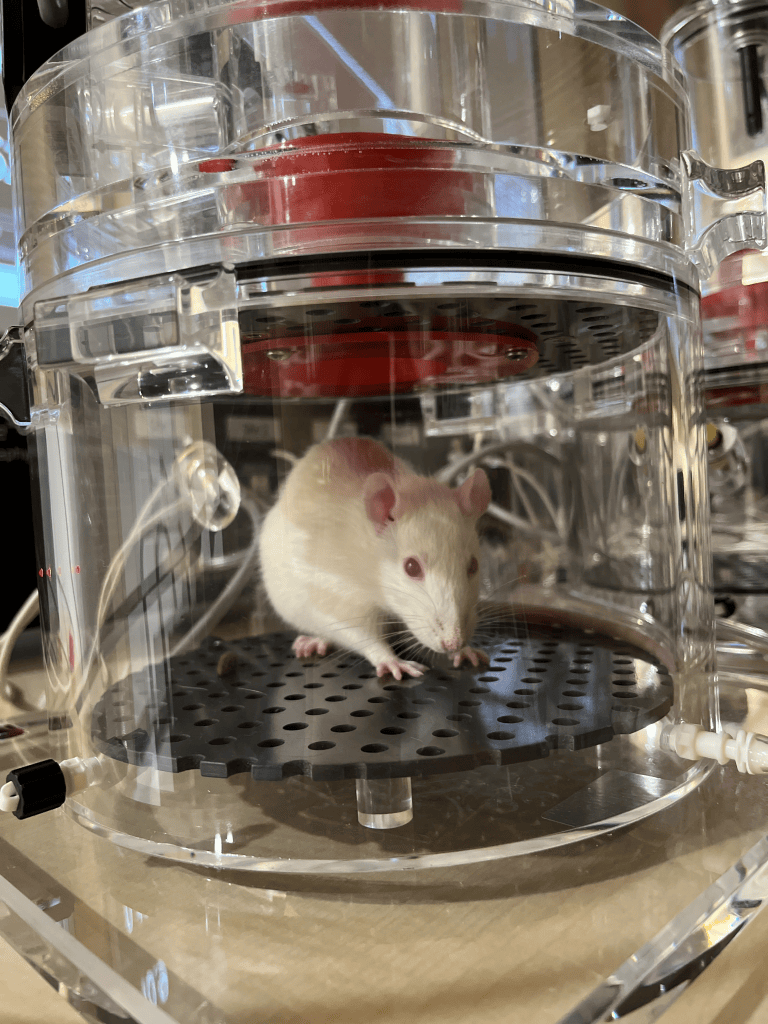
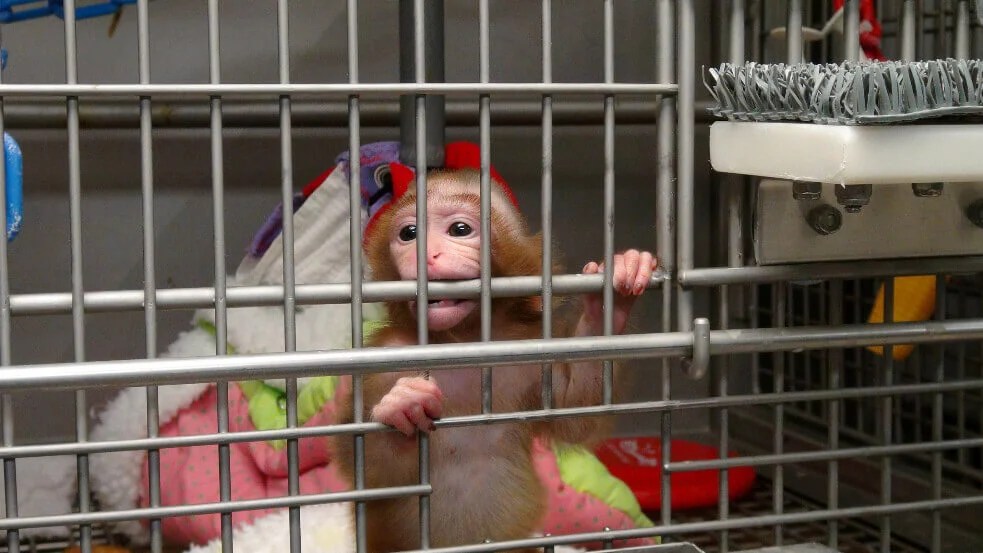
Unfortunately, factory farms aren’t the only places where animals are harmed. In laboratories across the United States, animals like rabbits, cats, monkeys, and mice are used in experiments. Some of this testing is for important reasons—like studying how to treat cancer or making sure new medicines are safe. But a lot of testing is done for things that really don’t need animals at all, like trying out a new shade of lipstick or testing the smell of a new perfume.
In this part of our animal-rights unit, we’ll explore who still tests on animals, how the tests are done, and why companies choose to do them. We’ll look at real examples—for instance, how rabbits are used to test eye irritation, or how mice are used when companies want to check a new cleaning spray.
By the end, you’ll get to decide for yourself:
And what products are you willing—or not willing—to buy so you’re not supporting animal testing?
Which kinds of testing feel necessary?
Which feel unfair or cruel?
Let’s start with the who. These companies test on animals (only Axe has stopped):

In your journal, recreate one of the brand logos. Then write next to the logo: Tests on Animals. Bonus: open another page and change the name of the brand or the logo so that it shows that they test on animals. Here are some examples from Island School Students:


Here are some logo hacks done by Island School students:


November 14 2025
OK! We’ve spent almost two months exploring the evils of factory farms and the surprising intelligence of animals we treat like milk, egg, and meat machines. Let’s see what you’ve learned!

November 10 2025
This week, we will be introducing a new menu item for those of you who have not yet fallen in love with your project or have completed theirs and are looking for something new. Menu item #5 is to carve a stamp:


If you aren’t sure what to carve or the message to write, here are some ideas:
Once you have finished carving your stamp, you can use it to create cards, t-shirts, or refrigerator magnets to be given out or sold during our craft fair.
November 3 2025
Seeing how these cows are treated on dairy farms, you might wanna think twice before that next cheeseburger. In that spirit, take a listen to Brayan’s “Cow Overlords Have Come” poem:
OK! Let’s start the week with an adventure. This is the story of Super Cow. Just like all cows, Super Cow:
🐮Has best friends and gets stressed when they’re apart.
🐮Shows sadness or happiness through his facial expressions and ears.
🐮Remembers faces for years and can even tell human voices apart.
🐮Loves being brushed — it relaxes him like a gentle massage.
🐮Can solve simple puzzles and learns from watching other cows
🐮As a calf, he and his mother cried for each other when they were separated.
🐮Likes to nap in the sun and chew his cud — a bit like people relaxing after lunch.
Now that you know a little about Super Cow, let’s watch as he (just like your board games) attempts to escape a factory farm:
Now that we’ve witnessed all the gloom and doom of factory farms, let’s take some time to appreciate the animals we eat and see them in a new light: as something more than food. Here are some facts you might not know about chickens:
🐔Mother hens talk softly to their chicks before they even hatch.
🐔Chickens dream when they sleep, just like humans do.
🐔They take dust baths to stay clean and cool — it’s like their version of a shower.
🐔Chickens form tight friend groups and often hang out with their favorites.
🐔They remember who has been kind or mean to them.
🐔Roosters warn their flock of danger before they eat — like lookouts in a group of friends.
Here is our updated menu for November!

october 31 2025
Here are a couple of dark and twisted short films that get us thinking about the animals we consume. The first asks us- what if we had to kill the meat we eat instead of having it served to us already fried, breaded, or covered in sauce?
The second film calls for use to think about why some animals are food, while others are pets.
october 27 2025

Last week we learned about the torturous conditions that mother cows experience on rotating milking platforms and mother pigs experience in farrowing crates. This week we will focus on hens.
Hens live in battery cages—small wire cages stacked in huge rows inside dark warehouses. Each cage holds 5–10 hens who spend their entire lives standing on metal wires, never able to stretch their wings, walk, or feel the sun. The cages are so crowded that the hens often stand or lie on top of each other, and many lose feathers or develop painful sores. Because the metal floor slopes downward, their eggs roll away the moment they are laid—reminding us that these animals are seen only as egg machines, not living beings.


Speaking of eggs, what happens to them after they’re laid?

So now that you know about the conditions of battery cages, which kinds of eggs provide the best life for the hens?

Now back to all those sweet hens. They are intelligent, curious animals who can recognize over 100 different faces and form close friendships with other hens. They even “talk” to their chicks before they hatch, clucking softly to comfort them.
I’m also going to begin posting some DISTURBING real-life videos of how animals are killed in Factory Farms. I will not be showing this during mini-lessons, but if you are interested, here are the first links called Your Chicken in Reverse and Why Baby Chicks Shredded Alive?

october 21 2025

In factory farms, animals are treated more like parts of machines than living beings. Cows stand on rotating milking platforms that slowly spin in circles while machines milk them. The cows rarely see sunlight or touch grass, spending most of their lives indoors under bright lights.
Mother pigs are trapped in farrowing crates, unable to turn around or even nuzzle their babies. For weeks, they can only lie on their sides while the piglets nurse. Many bite the metal bars out of frustration and boredom.
Some places have started to ban these systems, but most still use them — choosing what’s faster and cheaper over what’s kind.

Soundtrack Activity
For today’s activity, we’ll create a soundtrack that matches the feelings you get from what’s on the screen.
- Long, low notes = sadness or death
- High, short notes = panic or something scary
- Slow notes with long pauses = something that happens day after day
Not everyone will play today, but everyone should watch closely to what’s happening to these living beings — animals with feelings, friendships, and dreams. Use what you see for your constructions, songs, art, and documentaries.
Today’s journal entry is called Two Sides:
Draw a big square on the page and divide it in half.
Choose one animal from the video — a cow, a pig, or a chicken.
On one side, draw what you saw in the video —
- Cows standing on the turning circle
- Pigs lying in cages feeding their babies
- Chickens packed together in dark barns
(Stick figures are fine!)
On the other side, draw the same animal living the way you think it should —
- Cows outside in the grass and sun
- Pigs rolling in mud
- Chickens pecking in the grass
At the bottom, write one feeling word for each side.
How can you teach people about these rotating milking platforms and farrowing crates?
How does this video have to with Animal Rights?
october 14 2025
This week we’ll be zooming into item #3 on the menu. As we spoke about on our “Draw the Music” journal entry, music acts as a special key that opens up a door in humans. Once open, we are flooded with feelings, memories, fantasies, and the urge to move our bodies.
As Animal Rights activists, some of you can choose to use music to help wake up listeners to what non-human animals go through before we eat them. Below is a fill-in-the-blank song that can help you get started:


Want to be a little freer with your creation? Here’s another option to get you started with your lyrics:
Try singing it with this beat:
Now, here’s a quick tutorial on how to create and edit a song in Soundtrap about Animal Abuse:
october 10 2025
A quick note: The Tech Cafe Menu has been updated! I noticed that many students wanted an option to BUILD and to work with CLAY to express their understanding of animal rights. So for Menu Item #6, you can now create a mini-factory farm to reveal the terrible truth.


Also, I wanted to put a little nutritional information out there for those of you who were wondering, How can I still be healthy if I don’t eat animals?


Now that we’ve learned some of the basics of what goes on in factory farms, it’s time to take a look at some of the projects you can choose to show what you’ve learned and how you feel about it:

october 3 2025
What is this video saying about how Humans treat other Animals? What do you find most disturbing about it?
Last week, I asked you to think of a non-human animal that is special to you. The thing about these animals—especially our pets—is that we see them as living beings who are smart and have personalities. But when it comes to the animals we eat, we often treat them like objects.

Pigs can actually play video games, recognize their own names, and feel upset when another pig is suffering—but to us, they’re simply bacon.
Cows really do dream at night and form close friendships—but to us, they’re just steaks.
Chickens are social animals who can recognize over a hundred faces and remember people for months—but to us, they’re just nuggets and eggs.
If you think about it, we’re not so different from the guy in Steve Cutts’ animation.

So here’s a darkly weird idea: let’s reverse roles. Imagine a restaurant run by carnivorous chickens, pigs, and cows. Create a menu for them. What dishes would they serve if humans were the food? Draw the menu and give your dishes funny or creepy names like this 6th grader:


So if farm animals really are living beings with smarts and personalities, how should we treat them? To answer that, we first need to look at how they’re treated now. For the most part, the animals we eat are raised in factory farms:
Now that we’re ready to begin our projects, it’s important that your arts, crafts, songs, and movies TEACH people about Animal Rights. So, here are some facts you might want to include:
SEPTEMBER 29 2025
Humans are animals. But for the most part, we don’t kill and eat other humans, wear the skin of other humans, put humans in zoos, or test out dangerous chemicals on other humans. On the other hand, we do do each of those things to other kinds of animals like cows, monkeys, fish, and mice.


What does each of these pictures mean?
What makes humans different from other animals? What makes dogs and cats pets, while other animals like pigs are food? Can eating less meat and dairy be healthy, delicious, and good for the earth? Can we make cologne and perfume without testing them on animals?
These are some of the questions we will be answering in our Animal Rights Unit.
For your journal entry today, use watercolor and marker to make a picture of an animal that has meant a lot to you. If you cannot think of one, then create a picture of an animal you find beautiful or interesting. Write 1 sentence about why you chose this animal.

